

The Trench Coat: A Love Story That Never Ends
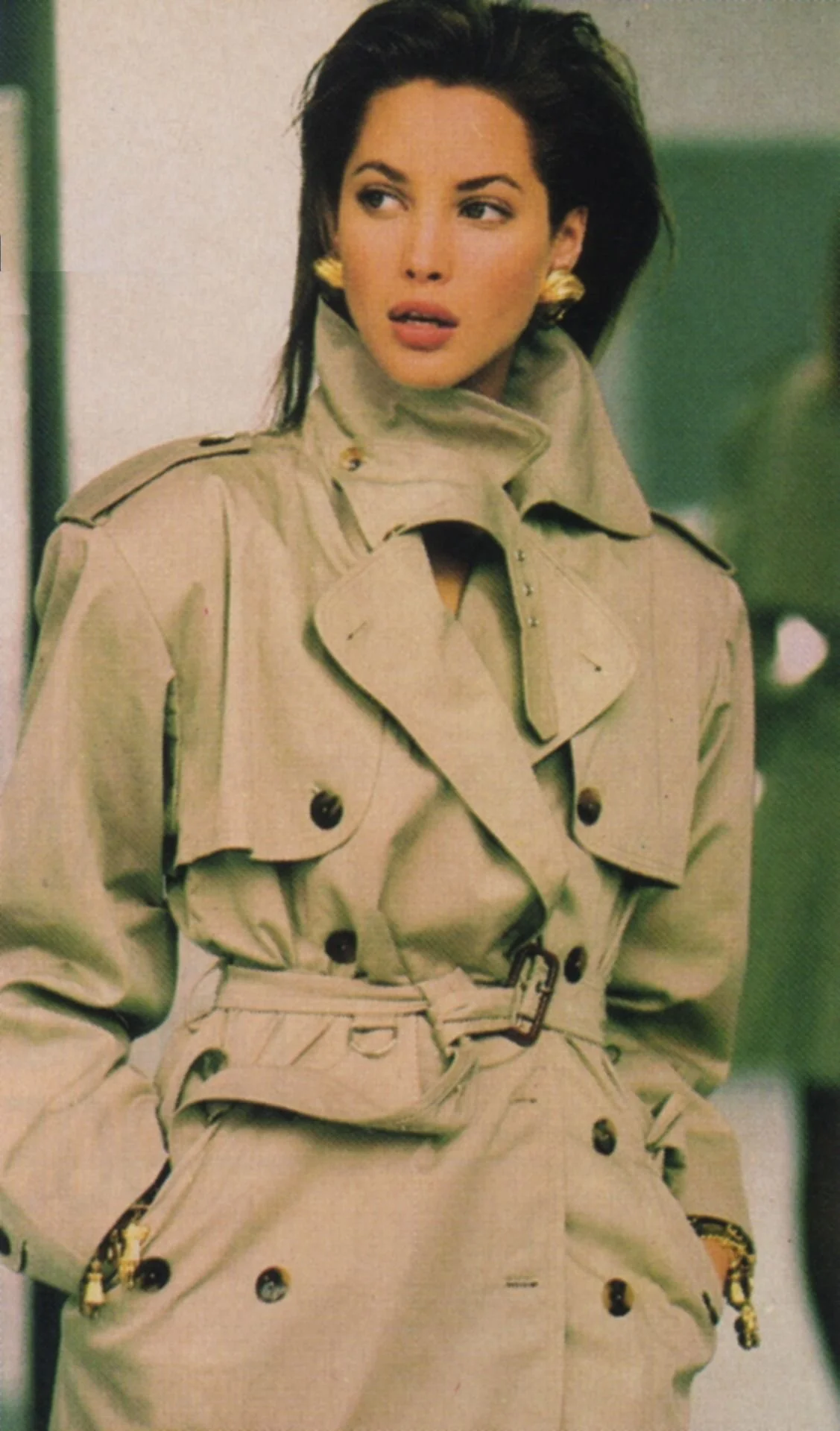
From the muddy trenches of WWI to your morning coffee run — how one coat became the closest thing fashion has to a religion.
There is something almost unfair about the trench coat. It looks just as good thrown over a silk dress as it does over jeans and a white tee. It works in October rain and March sun. It makes you look like you have your life together even when you absolutely do not. And for most of us, the moment we truly understood what a trench coat was — really understood it — the name Burberry was already somewhere in the sentence.
That is not an accident. It is over 160 years of very deliberate storytelling, and honestly? It worked. We all fell for it.
Burberry and the Origin Story We Can't Forget
Thomas Burberry invented gabardine in 1879 — a tightly woven, water-resistant fabric that breathed better than the rubberized coats men were suffering through at the time. By World War I, the British War Office had adapted his design into a military officer's coat: double-breasted, belted at the waist, with storm flaps and D-rings originally meant to hold equipment. Built for survival in some of the worst conditions imaginable.
And then the war ended, and the officers brought their coats home. And suddenly, this piece of military utility was walking the streets of London and Paris, worn by men who had seen things they could not speak about, wrapped in a coat that had kept them alive. That kind of origin story does not go away. It gets absorbed into the fabric — literally and figuratively.
Burberry understood this intuitively. Over the decades, they wrapped the trench in a mythology that connected it to Audrey Hepburn in Breakfast at Tiffany's, to Humphrey Bogart in a foggy Casablanca doorway, to the kind of European elegance that felt both attainable and completely out of reach. The camel colour. The signature plaid lining. The structured epaulettes. Every detail is a signal.
"The trench coat doesn't follow trends. It observes them — from a very well-dressed distance."
When Christopher Bailey and later Riccardo Tisci, and now Daniel Lee, took the creative helm at Burberry, each of them returned to the trench as the house's true north. Not because they lacked imagination, but because the trench coat is Burberry's most honest statement about itself. It says: we were here before you, and we will be here after.
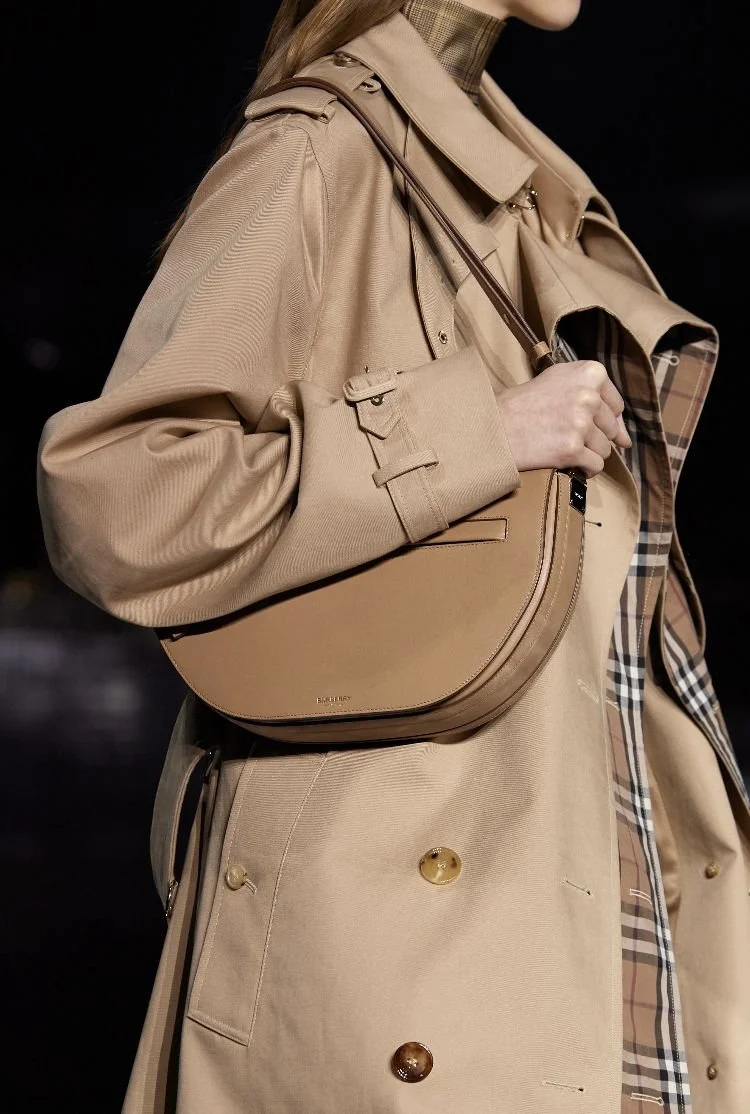
Today, a classic Burberry Westminster trench can cost anywhere from €1,500 to €2,500 or beyond. People save for them. People inherit them. People buy them secondhand and have them dry-cleaned and repaired like heirlooms. That is not the behaviour of people buying a coat. That is the behaviour of people investing in a symbol.
What the Trench Actually Says About You
Here is the interesting thing about wearing a trench coat in your daily life: it communicates a very specific set of ideas without you having to say a single word. It says that you understand the difference between style and fashion. It says that you are not chasing trends — you are simply above them, or at least adjacent to them. It says you are probably going somewhere moderately important, or would like people to think so.
This is, of course, part of why it has survived for over a century in the cultural imagination. The trench coat is aspirational but not ostentatious. You can wear it to a board meeting and to pick up groceries, and in both contexts, it will make a quiet, confident argument on your behalf.
On the psychology of it all
Fashion psychologists have long pointed to the trench as one of the few garments that functions simultaneously as armour and as invitation — it covers the body while drawing the eye. The belt, always tied or buckled at the waist, creates a silhouette. It structures you. When you put on a trench coat, you are making a conscious choice about how you will meet the world today. And the world tends to respond accordingly.
There is also something wonderfully democratic about it. The trench coat is not age-restricted. It does not belong to a particular body type. A 22-year-old creative wearing a vintage beige trench over a band tee and cargo trousers is speaking a completely different dialect to a 45-year-old architect in a structured black trench with wide-leg trousers — but they are both using the same language. That kind of versatility is extraordinarily rare in clothing.
And then there is what it does on a purely practical level. The trench coat is a transitional-weather miracle. Spring and autumn — those chaotic, indecisive seasons — are essentially an advertisement for it. You leave the house at 9am in 12°C and by 2pm it is 19°C and somehow the trench has managed both. It is the garment equivalent of a person who is good in a crisis.
The Democratisation: Everyone Has One Now
Once a silhouette becomes embedded in the cultural consciousness, it becomes everybody's property. And so, over the past few decades, the trench coat has been reimagined, deconstructed, elevated, and made accessible by brands across every tier of the market. Which is, depending on your perspective, either a beautiful democratisation of great design — or the moment a symbol loses its edge. Probably both, simultaneously, as most interesting things are.
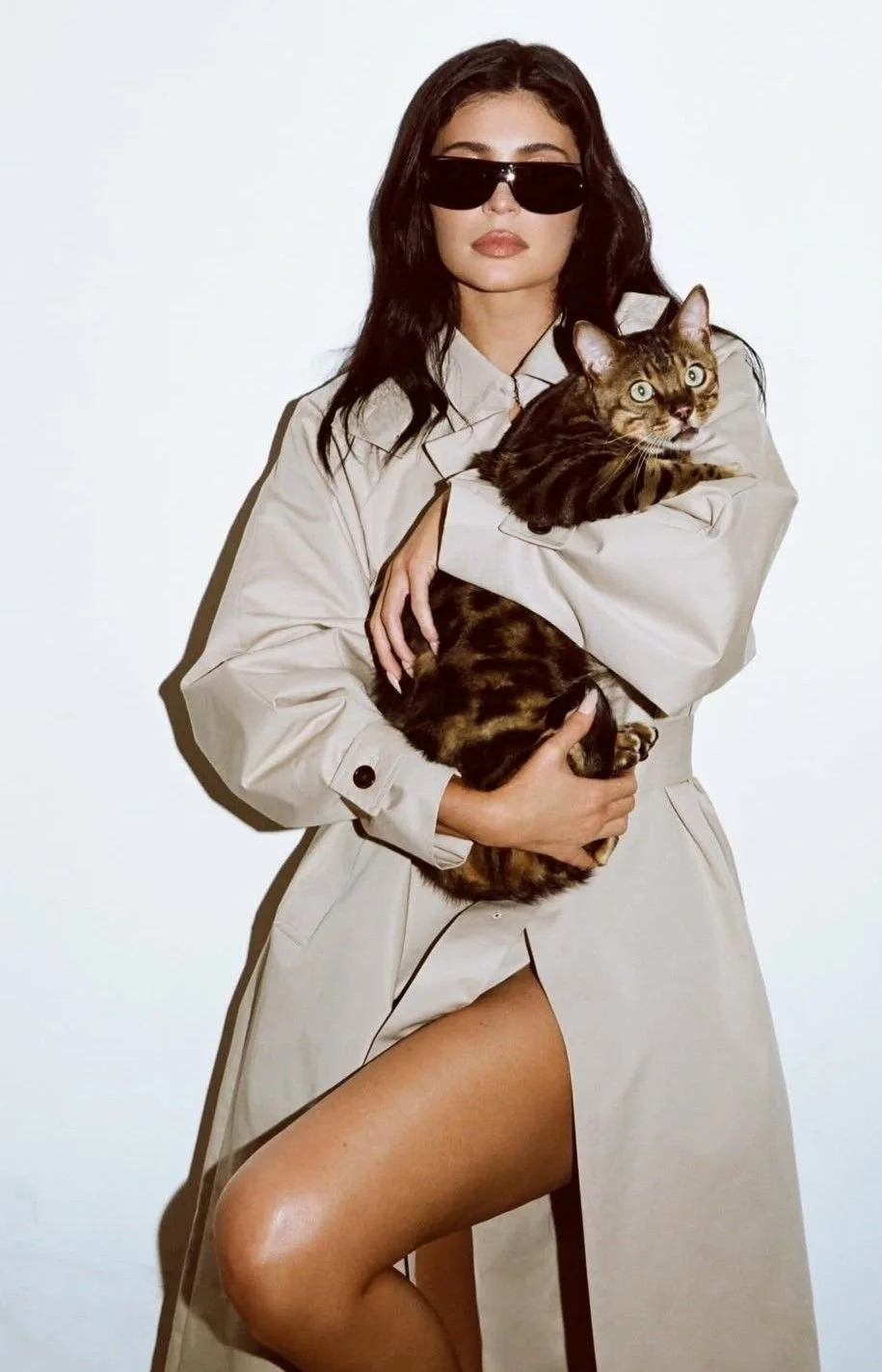
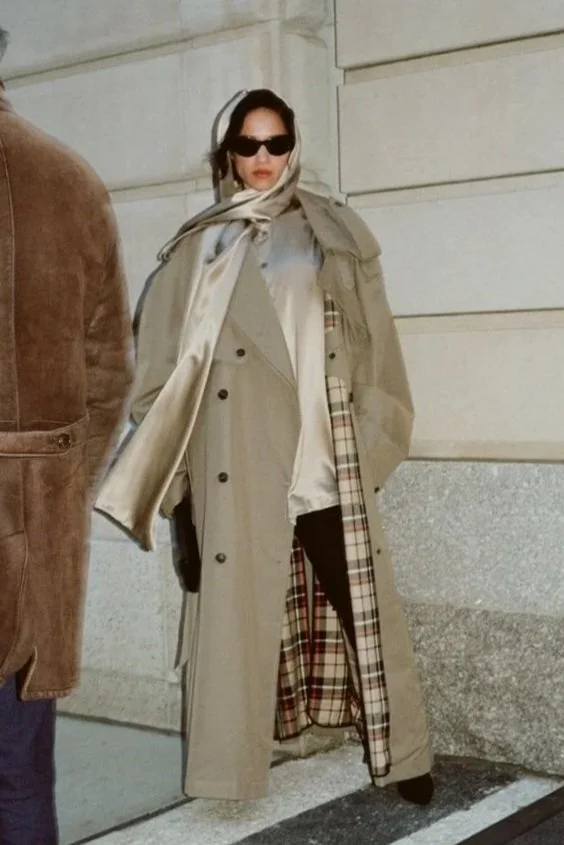
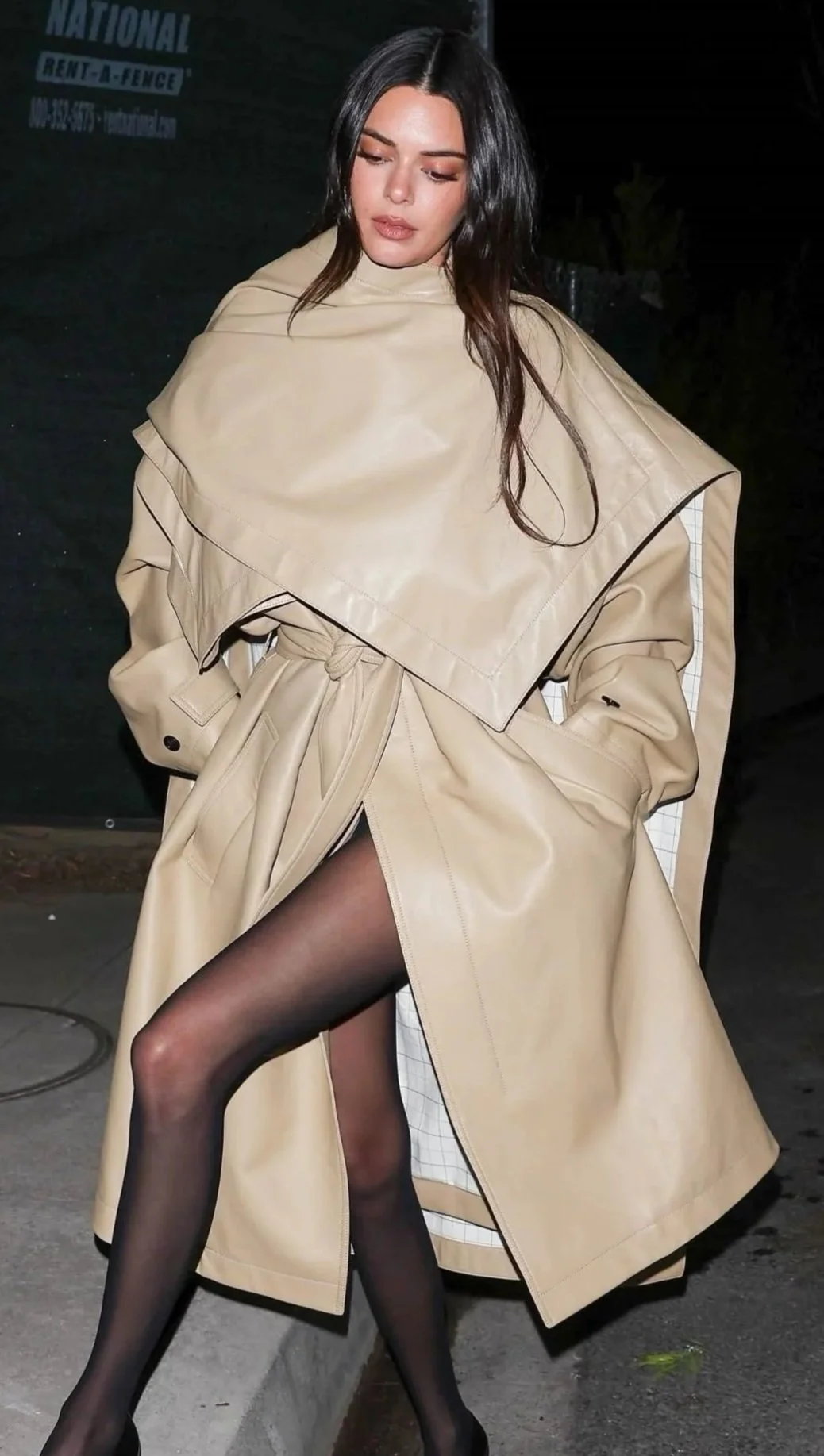
The high fashion world has had a field day with it. Bottega Veneta made it enormous, architectural, almost absurdist in its proportions. Lemaire stripped it down to something so quiet and considered it felt almost conceptual. Totême built their entire brand identity around a kind of Scandinavian minimalism in which the trench plays a starring role — neutral colours, impeccable cuts, zero noise. Acne Studios brought a studied coolness to it, making trench coats that looked like they belonged to someone who definitely has a more interesting weekend than you.
Totême: Scandinavian minimalism at its most deliberate. The trench as architecture.
A.P.C. : French restraint. Slightly oversized, always right. The thinking person's trench.
Sandro: Parisian accessibility. Great entry points with genuine design credibility.
Arket / & Other Stories: H&M's elevated siblings. Surprisingly good fabrication, honest pricing.
Massimo Dutti: The quiet luxury option that no one talks about enough. Structured and serious.
Zara: They get it right most seasons. Not heirloom material, but genuinely stylish.
And at the very accessible end of the market, the trench coat has become a staple of fast fashion and the high street, which means everyone has access to the silhouette, and the silhouette itself has become somewhat ubiquitous. You will see trench coats on every street in March. This is not a bad thing. It means the design is genuinely good. Bad designs do not get copied this many times.
The interesting creative tension is that the more copied the trench becomes, the more the quality of the original matters. Which is perhaps the whole argument for spending more on one — not because you need people to know you spent more, but because the difference in how it drapes, how it ages, how it feels on a cold morning is genuinely noticeable to the person wearing it. A good trench coat is a daily pleasure. A bad one is just a beige inconvenience.

Why 2026 Is The Season for the Trench
We need to talk about the cultural mood, because it matters. Fashion does not exist in a vacuum; it responds to how people are feeling, collectively, about their lives and the world. And right now, there is a very strong appetite for clothing that feels grounded. Real. Well-made. Classic without being nostalgic in a hollow way.
The maximalism of recent years — the logomania, the dopamine dressing, the everything-louder-and-more-colourful energy — has been slowly giving way to something quieter and more intentional. People are buying less but thinking more carefully. Capsule wardrobes are not just a Pinterest concept anymore; they are a genuine response to decision fatigue and to a growing awareness of what it means to consume fashion responsibly.
The trench coat sits perfectly at the centre of this shift. It is the definition of a considered purchase. It is the kind of thing you could genuinely wear for ten years without it ever looking wrong or dated. In an era of disposable micro-trends and wardrobe anxiety, that kind of stability is almost radical.
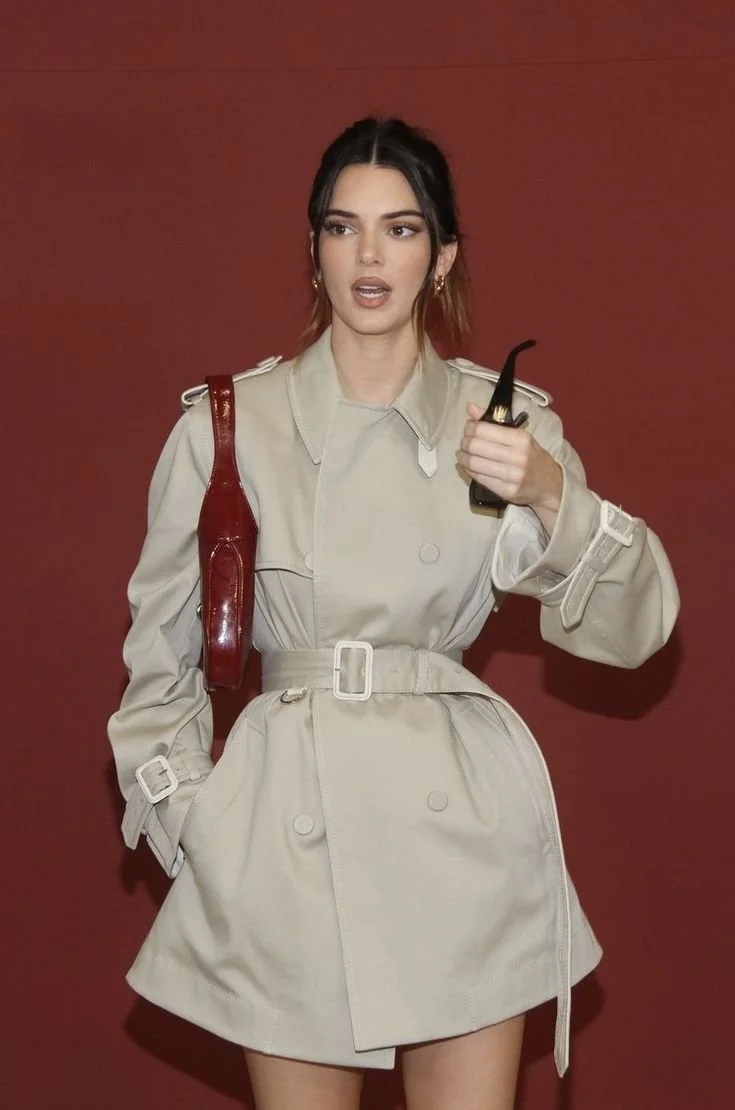
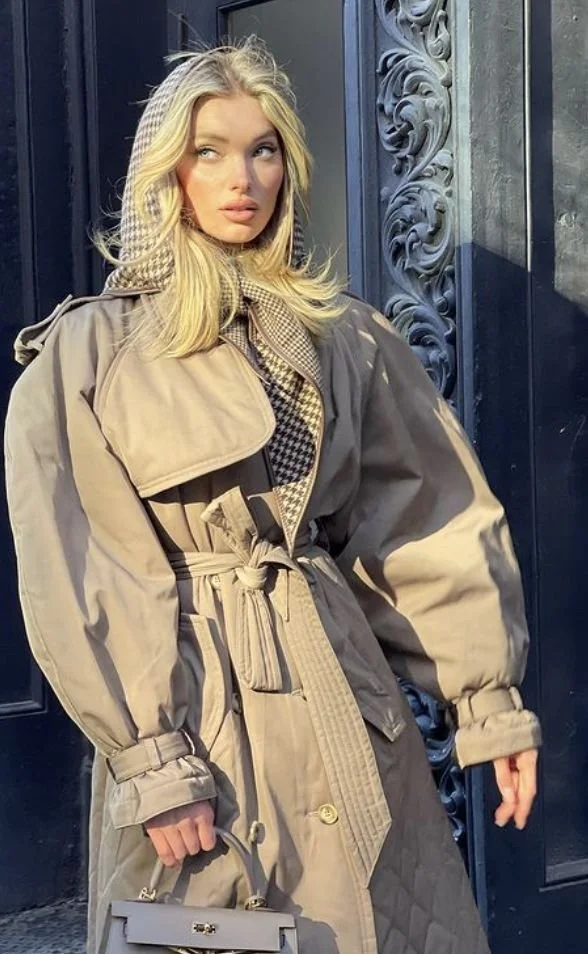
The 2026 runway interpretations have leaned into this beautifully. Longer hemlines are back — and the trench at midi or maxi length is having a particular moment, offering that sense of drama and occasion that short coats simply cannot deliver. Oversized belts and exaggerated lapels are giving structure a theatrical edge without abandoning wearability. And the colour palette has expanded thoughtfully: deep forest greens, warm chocolate browns, dusty greys — while classic camel and off-white remain, as always, non-negotiable.
There is also a growing movement around investing in one truly excellent trench coat rather than cycling through seasonal alternatives. It is the slow fashion argument made extremely tangible: a Burberry trench from 15 years ago still looks current. A €40 trench from 2022 probably does not. The long game, as it turns out, is also the more interesting aesthetic game.
How to Wear It in 2026 Without Looking Like a Fashion Cliché
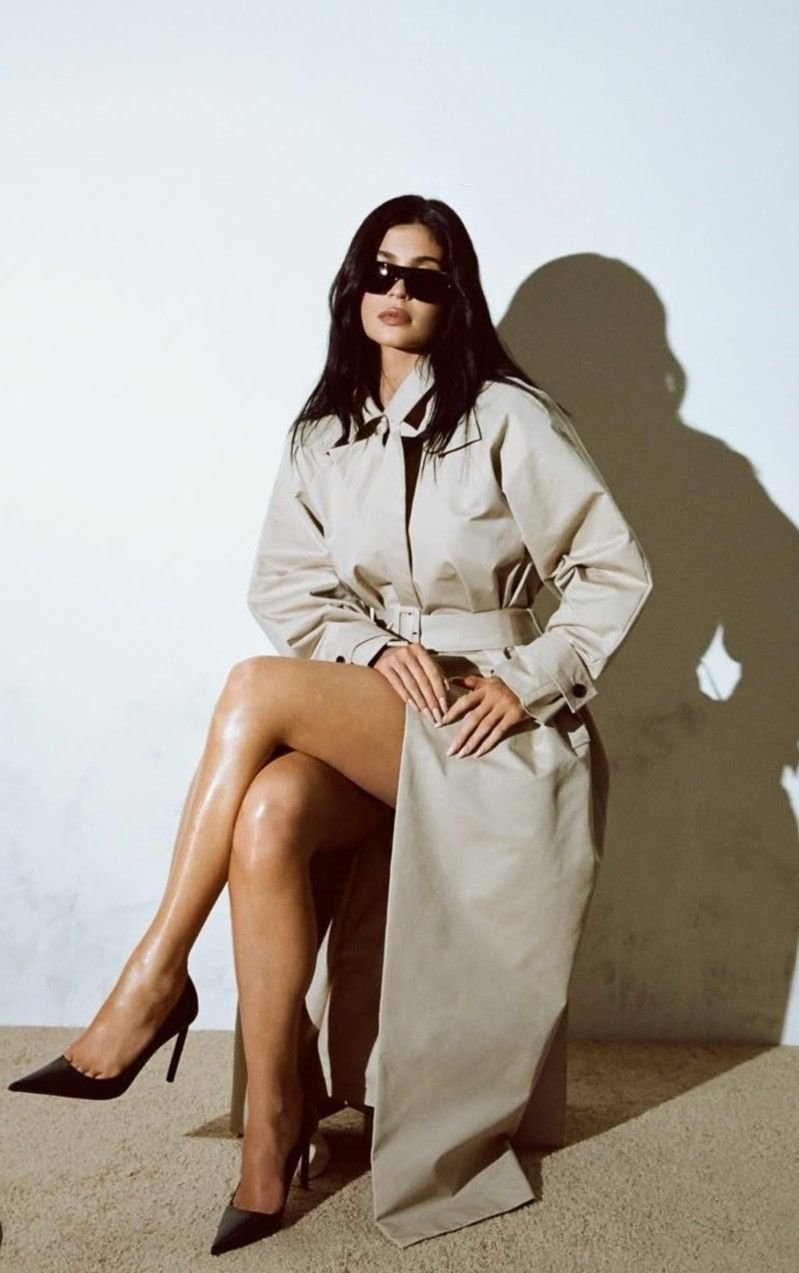
The classic styling approaches still work because they are classic for a reason — belt tied, collar up slightly, draped over the shoulders in that studied-nonchalance way that looks effortless and takes approximately eleven attempts to get right. But the more contemporary approach is looser. Oversized, worn open over wide-leg trousers and flat loafers or chunky boots. Layered over a chunky knit for actual warmth rather than just aesthetic warmth. Thrown over tailored shorts in early autumn — which sounds like it shouldn't work and absolutely does.
The styling conversation in 2026 is also much more relaxed about mixing price points than it used to be. There is no contradiction in wearing a Burberry trench with a €25 Zara tee and vintage jeans. The trench elevates everything around it, which is precisely why it is worth investing in. It is the coat that makes the rest of your wardrobe look like you planned it.
The one styling note worth making: resist the urge to over-accessorise when the trench is involved. It is already making a statement. Your job is to support the statement, not compete with it. One good bag, clean shoes, simple hair. The trench will do the rest.
The Conclusion, Which Is Not Really a Conclusion
The trench coat has been declared dead approximately forty-seven times since the 1970s, and it has ignored every single announcement. It will be here in 2036 and 2046 and probably long after fashion as we currently understand it has mutated into something unrecognisable. Because it is not a trend. It never was.
It is something rarer: a genuinely good design solution to the perennial human problem of needing to be protected from the weather while also wanting to look like you have things figured out. Burberry understood this first, and they built a mythology around it that will outlast almost everything else currently happening in fashion. But the coat itself — the structure, the belt, the silhouette — that belongs to all of us now.
So yes, buy the trench. Buy the best one you can afford. Wear it on the days when you need to feel capable of things, and on the days when you just want coffee and quiet. Wear it belted and wear it open. Wear it until it has a history.
That is, ultimately, the whole point.
