

The Slouchy Bag Is Not Having a Moment. It's Having a Reckoning.
Growing up, I had a rule. If it didn't fit in my pockets, it wasn't coming with me. I was that person — the pocket maximalist, the one who'd watch someone haul a full-size tote onto the metro and think, privately, smugly: why? What could you possibly need in there? My whole philosophy of dressing was built around the radical conviction that less weight equals more freedom, and that anything a bag could carry, a jacket with enough pockets could do better. I was very committed to this idea. I was also, it turns out, partly wrong.
My mom did not share this philosophy. Not even a little.
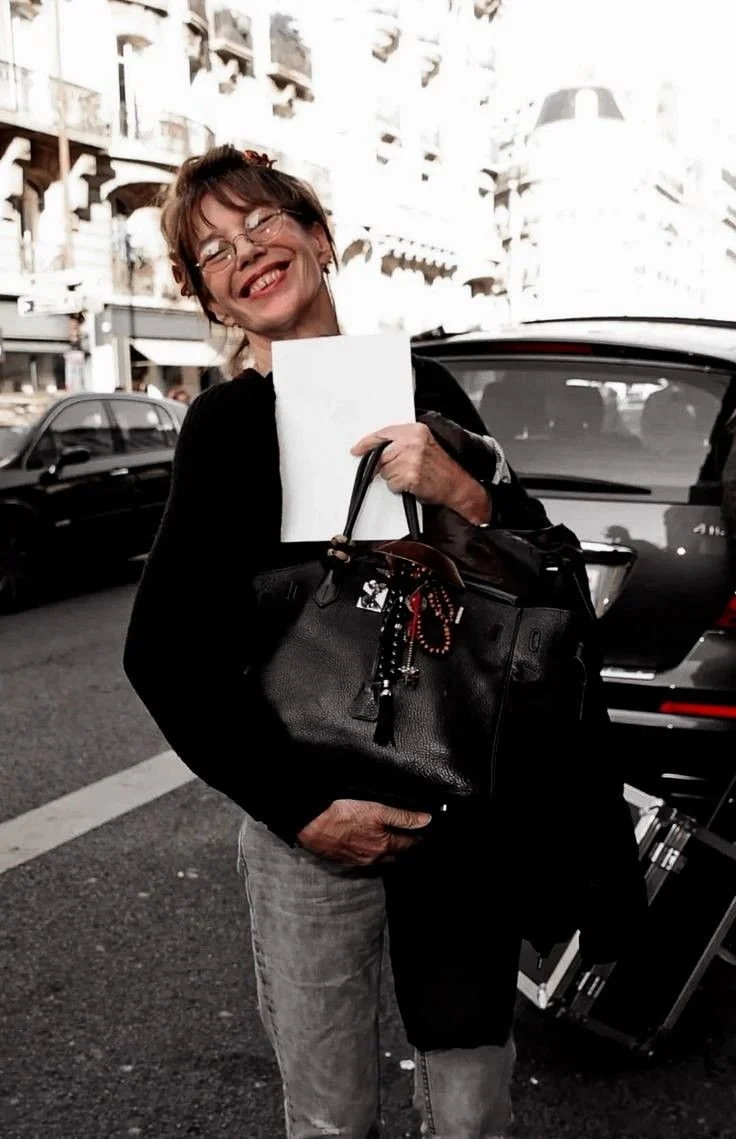
There are specific images from childhood that live in my memory like little fashion time capsules. One of them is my mom getting ready to leave the house. The routine and the bag. Always the bag. A big, black slouchy leather thing — or what I was pretty sure was leather; I was seven, I wasn't exactly running quality assessments — with soft, rounded edges that collapsed into itself slightly when it sat on a surface, like it was comfortable there. She'd load it up with everything she needed (which, as a working single-mother in the early 2000s, was approximately everything) and just go. Like Jane Birkin (the icon) itself.
I thought it was a practicality thing. A generation thing. A mom thing. I filed it away accordingly and moved on.
I was wrong on all three counts. Obviously.
The Sabbatical That Changed the Argument
Fast forward to my sabbatical year in Portugal back in 2023 (not too long ago) — Lisbon specifically, which does genuinely dangerous things to your sense of aesthetics if you arrive with any kind of budget limitations and a vague susceptibility to beautiful objects. The light there is different in a way that sounds like a cliché until you've actually stood in it. The tiles are everywhere. The people dress with a specific kind of easiness that isn't about trying hard; it's about having already figured out what works and then just doing that, quietly, every day, without making a whole thing about it.
I wandered into a Bottega Veneta store. Not with intention — the way you wander into a beautiful room and immediately lose track of the plan you had for the afternoon.
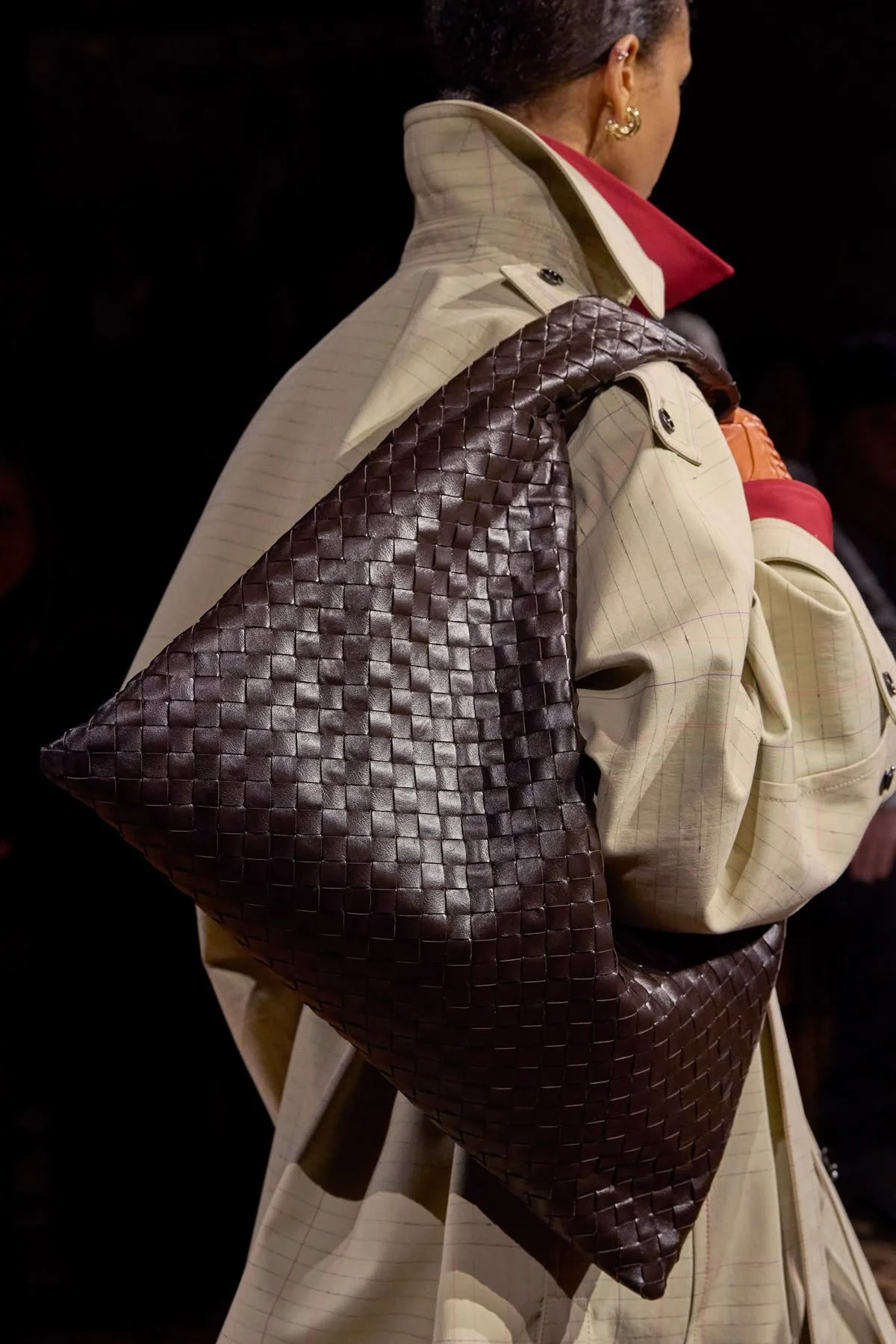
And there they were. The Veneta bags. The original. The classic. The one that built a brand identity so specific it didn't need a logo, and that became the most discussed object in fashion when a new creative director understood, correctly, that what the world needed was more softness. Not more structure. More softness. The bags sat on their display surfaces in that way that only genuinely excellent unstructured leather bags can sit — collapsed and full of dignity at the same time, like a person who is very relaxed but would also absolutely not stand for disrespect.
"I stood in that store and understood, for the first time, that my mother wasn't carrying a big bag because she had to. She was carrying it because she wanted to. That choice was the whole point. It was always the whole point."
There is something about a truly excellent slouchy bag in person that no photograph has ever successfully captured — and believe me, Instagram has tried. It's the weight of it when you pick it up. The way it moves against your body — not rigid, not demanding, not performing anything. Just present. Accommodating in that rare, quietly confident way that only very good design and very secure people manage to pull off.
It shapes itself around whatever you put inside it, which sounds like a basic functional observation until you sit with it for a moment and realise: most designed objects do the exact opposite. Most designed objects hand you a set of terms and conditions and wait for you to comply. The slouchy bag declines to make that argument entirely. It meets you where you are. Which, if you think about it, is a more radical design position than anything that came out of a decade of boxy top handles and architectural mini bags that could barely fit your keys and your personality crisis.
So I tried every single one in the store. Small, medium, the ridiculously big ones that made me look like I had ambitions. Lilian — my SA, who clearly understood she was dealing with someone in the middle of a quiet personal revelation and handled it with complete professionalism — explained everything. The leather. The craft. The why behind each silhouette. She didn't rush me. The bags didn't rush me. It was the most at peace I'd felt in a fitting room in years.
I didn't buy one that day. Sabbatical year — and not, to be very clear, a sabbatical year with any structural financial support. Just vibes and a Lisbon apartment and the gradually dawning understanding that I had been wrong about several things for quite some time.
But I left with something more durable than a purchase: the specific, slightly humbling realisation that my mother had been making an excellent design choice every single morning for my entire childhood, and I had categorised it as mom behaviour and filed it away without a second thought. Which says considerably more about me than it does about her. Or the bag.
And now — obviously, inevitably — I need to go back to that exact store in Lisbon. Same street, same light, probably a different Lilian (hope not), but the same energy. I want to buy at least two bags: one for her, one for me. So that someday, some child who belongs to me will watch me leave the house with a big soft leather bag full of everything I need, and think why does she carry that enormous thing — and spend the next twenty-five years finding out.
What the Slouchy Bag Is Actually Saying
The thing that fashion coverage of the slouchy bag gets wrong — when it treats it as a trend arriving or departing — is that it mistakes a posture for a phenomenon. The unstructured bag is not a moment. It's a position. A design philosophy that says: I will not dictate terms to you. I will carry what you need. I will look good doing it, and I will not require you to perform the carrying.
The hobo, the tote-hobo hybrid, the unstructured shoulder bag — the names shift but the geometry stays consistent across decades. In the 2000s it lived on your mom's shoulder. In the 2010s it got edged out by boxy top handles and architectural mini bags that could barely fit a phone and the emotional weight of being seen with the right thing. In 2026, the slouchy bag is back — but what's different this time is that we're not calling it a comeback. We're calling it a correction.
The structured bag era served a purpose. Fashion was doing what it always does between cultural cycles: overcorrecting, making a point, proving it could be precise and controlled. And the point was cool. Genuinely. But cool and liveable are different categories, and eventually the gap between them becomes visible. You can only spend so many months carrying a bag you have to baby before you start wondering why you're doing this to yourself.
Real life, it turns out, needs a water bottle. And headphones. And a book because you got stuck somewhere without data. And possibly a snack, because you're a person and people get hungry. The structured bag looks at this list and says: pick two. The slouchy bag says: put them all in, I'll figure it out.
Your mom knew this. She has always known this. The fact that it took you a sabbatical in Portugal and a Bottega Veneta store to arrive at the same conclusion is, honestly, very on-brand for your generation — but let's not dwell on that.
Why Now, and Why It Matters
The cultural appetite that's driving the slouchy bag's current moment is the same appetite that brought back ballet flats and wide-leg trousers and the general energy of dressing for how you actually feel rather than for a grid. There is a real and growing weariness with fashion as performance — with buying things specifically to signal participation in a moment that will be over in four months. People are buying less, keeping things longer, and asking with genuine seriousness whether the object they are considering will still make sense to them in three years.
The slouchy bag answers yes to that question without hesitation. It's been answering yes since before you were born.
Suede is having its biggest moment in years alongside it, which makes complete sense as a pairing — suede is the fabric equivalent of the unstructured bag. Tactile. Slightly imperfect by nature. Gets better with wear rather than showing its age in ways you have to manage. A suede slouchy bag in 2026 is practically a manifesto about the kind of beautiful things don't need to be precious to matter.
Every tier of the market is responding. The luxury houses that built their reputations on it are leaning deeper into the craft. Mid-market brands are finally figuring out how to translate the silhouette without losing what makes it actually work. The conversation is everywhere — and for once, it's a fashion conversation that is also just a conversation about living well. About carrying what you need without making it difficult. About the bags your mom had and the ones you're finally ready to appreciate.
I called my mom after that afternoon in Lisbon. Told her about the Bottega store, that I'd stood there surrounded by soft leather bags and finally got it. There was a pause on the line — the specific pause of someone who has been correct about something for twenty-five years and is choosing, with admirable restraint, not to make it a whole thing. And then she laughed. Just laughed.
Buy the slouchy bag. The one that makes you feel something when you pick it up. The one that has enough room for your actual life. Let it slump when it sits down because it has been places, it has done things, it is not performing structural integrity for your benefit. Carry it with the same quiet confidence your mom had when she walked out of the house every morning in the early 2000s with everything she needed and zero apologies about the size of the thing carrying it.
She knew. She always knew.
8 Slouchy Bags Worth Every Single Penny
We're not here to talk about prices. We're here to appreciate the craft. (You can do both simultaneously. It's allowed.)
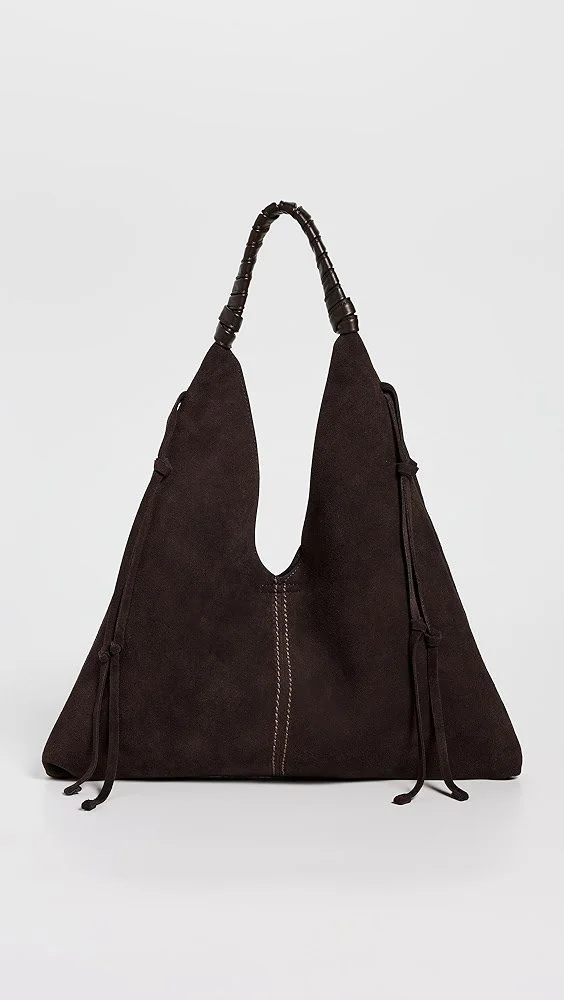
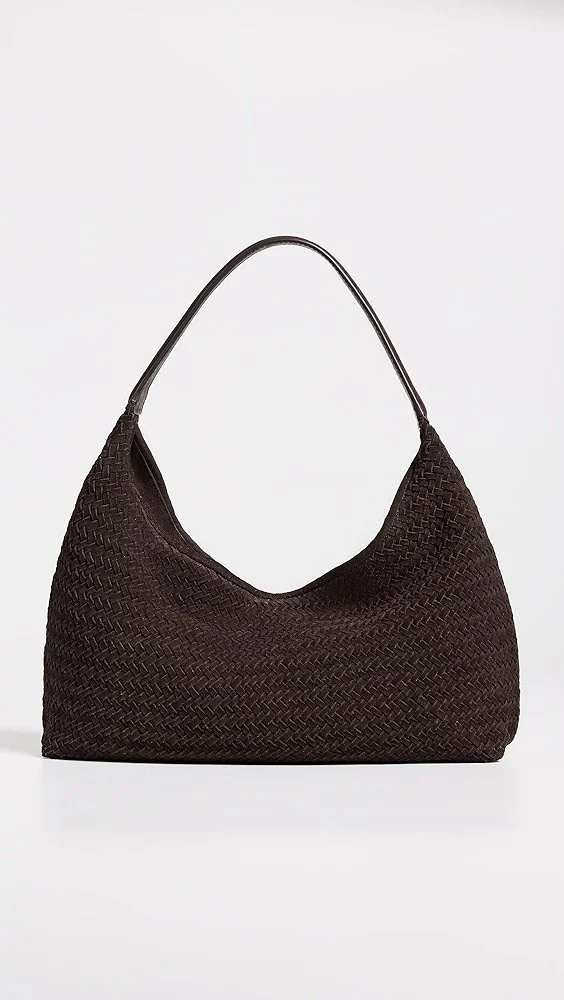
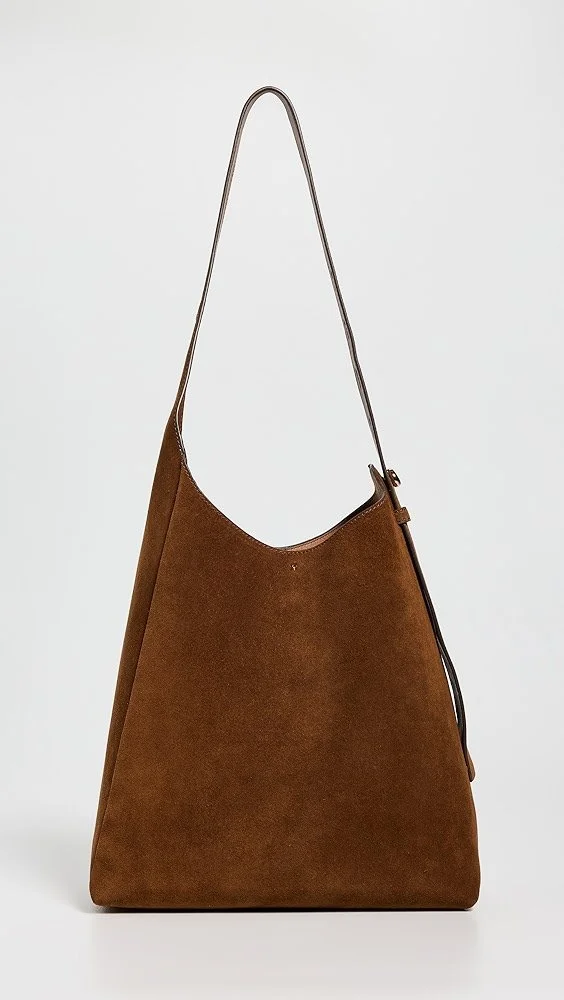
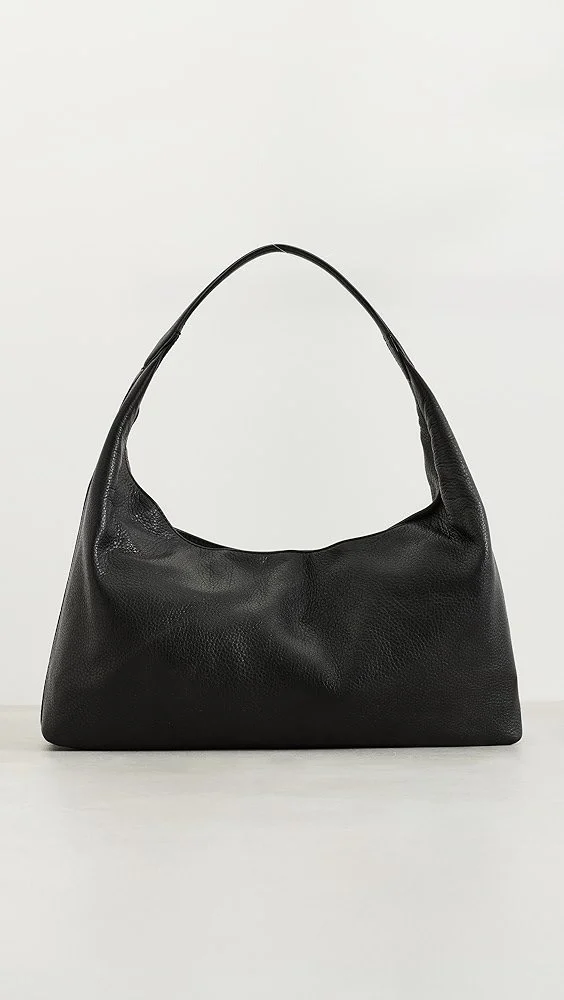
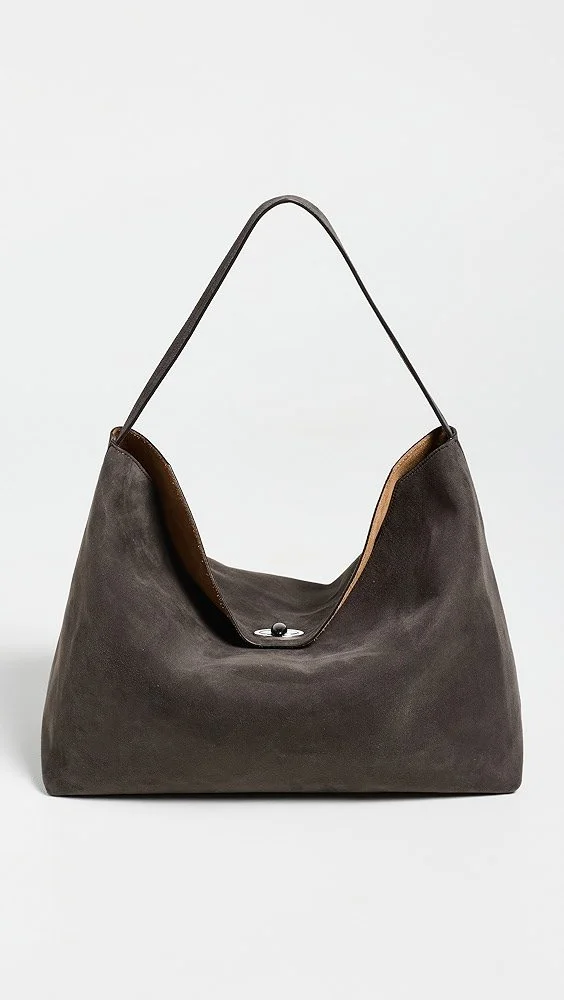
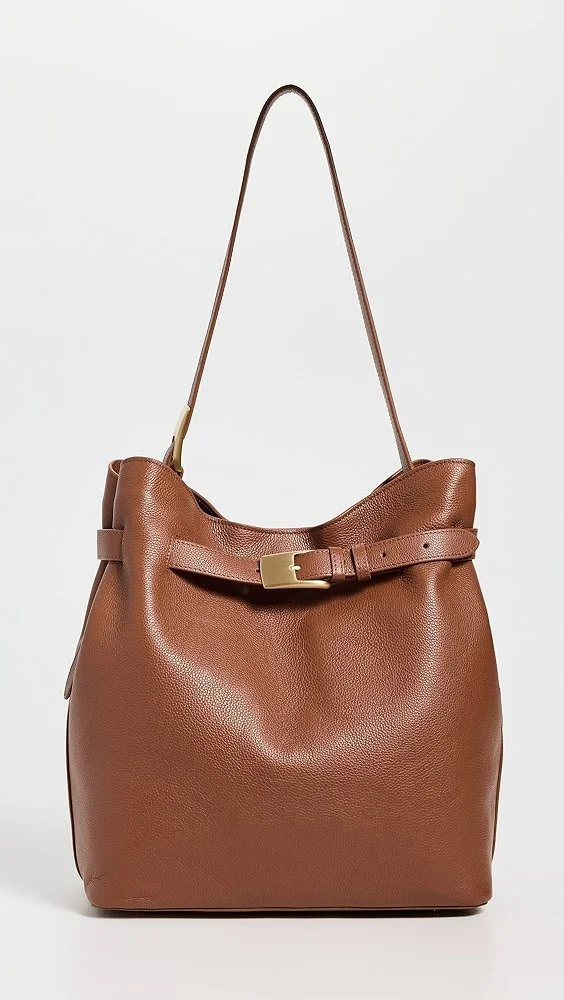
Dolce Vita Merrick Handbag: The accessible entry point that doesn't feel like a compromise. Soft, rounded, clean — classic enough to carry for years, grounded enough that it doesn't completely give up on itself when you set it down. In black, it is the closest thing to my mom's bag that exists at a human price point. This is the one you start with. The One Your Mom Had
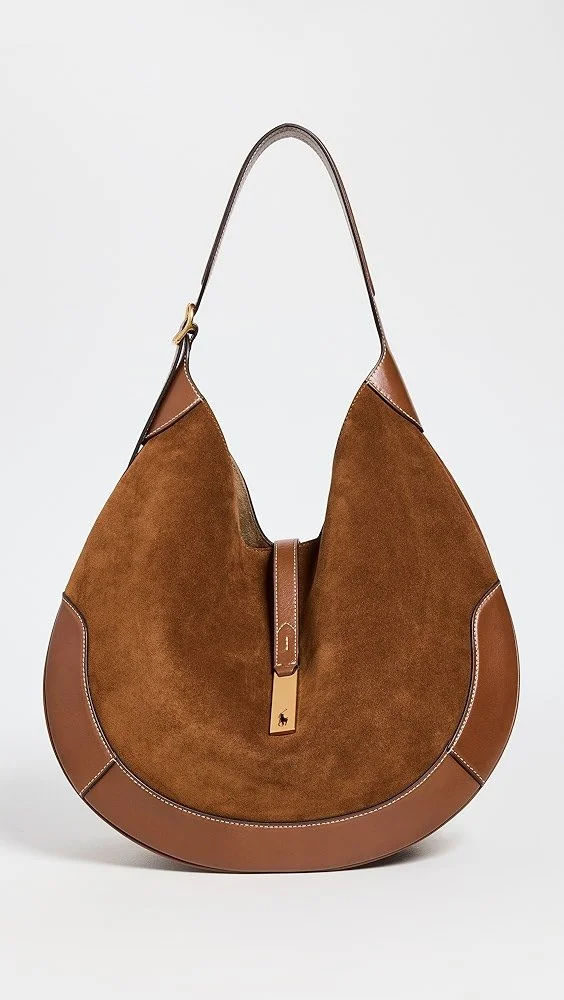
Polo Ralph Lauren Suede & Leather Shoulder Bag: Two textures that have no right to work as well together as they do here — and yet. The suede-leather combination creates something that photographs beautifully but feels even better when you're actually carrying it. It holds all the 2026 soft-dressing energy in one silhouette without working too hard to make the point. The Texture Argument
Madewell Slouchy Shoulder Woven Suede Bag: Woven suede is the design language of the moment, and this one speaks it without shouting. Visual complexity in the texture, genuine softness in the structure, the whole thing sitting in that productive tension between crafted and relaxed. If you've been looking at Bottega's intrecciato and feeling strong feelings about it, this understands what you love about it. The Bottega Feeling
Tory Burch Romy Suede Hobo Bag: Tory Burch has been building quietly towards this moment for a few seasons, and the Romy line is genuinely one of the best-executed everyday hobo shapes in the mid-luxury market right now. Soft suede, subtly asymmetric silhouette, spacious interior that fits everything you actually need. Lightweight but present. The bag people reach for at 7 am and forget they're wearing by noon — which is the highest compliment. The Daily Driver
Madewell James Dean Slouchy Shoulder Bag: The name alone sets up certain expectations, and this bag meets them with the energy of someone who knew you'd ask. There is something innately cinematic about a good slouchy bag — it looks like it belongs in a car's passenger seat, or on a dressing room floor, or on the shoulder of someone who is clearly going somewhere more interesting than wherever you are right now. This is that bag. The Cinematic One
Christopher Esber Turnlock Suede Grande Shoulder Bag: The turnlock hardware is the one piece of structure that stops this from dissolving entirely into softness — and that's exactly the right editorial decision. It gives the bag an anchor. A moment of intention in an otherwise relaxed object. Grande sizing means it carries like an adult bag should: your life fits inside without negotiation, without compromise, without apology. The Power Bag
Elleme Belt Bag in Pebbled Leather: The French brand is doing very quiet, very considered things with leather that deserve more of your attention than it currently gets. Pebbled leather has a grounding quality that smooth leather doesn't — more honest, more lived-in from the first day. This sits in the interesting, ambiguous space between belt bag and soft shoulder bag, and it navigates the ambiguity with the kind of ease that only good design can pull off. The French Edit
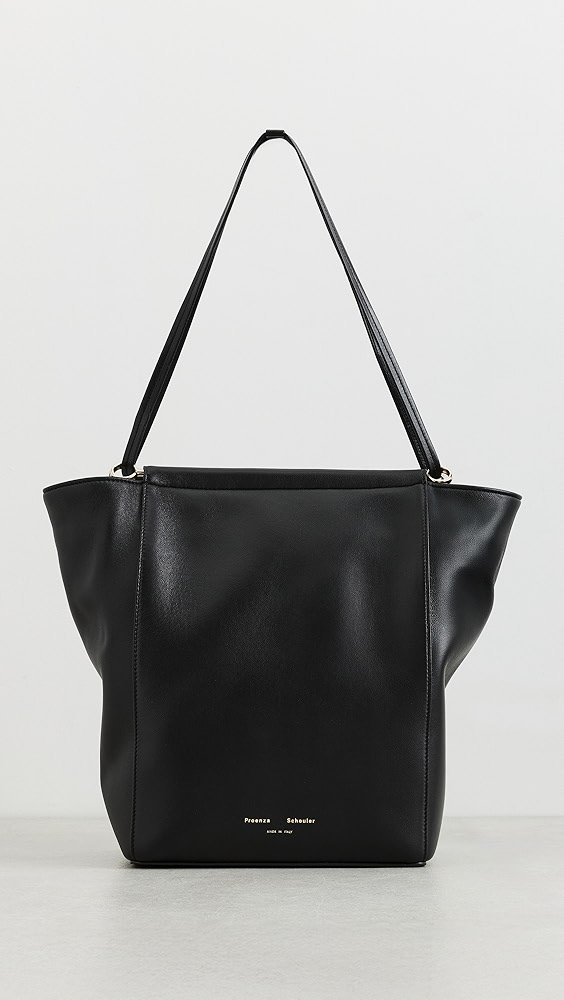
Proenza Schouler Reade Shoulder Bag in Nappa: Nappa leather is what happens when leather decides to take proper care of itself. Buttery, supple, the kind of material that improves every single time you handle it. Proenza Schouler has been one of the most thoughtful voices in American bag design for years, and the Reade is the piece that earns the investment conversation without demanding it. This is the one you save for. And then use every single day and never, not once, regret. The Investment Piece
I called my mom after that afternoon in Lisbon. Told her I'd been in a Bottega Veneta store. That I finally understood the bag. There was a pause on the line — the specific pause of a person who has been right about something for twenty-five years and is choosing, with admirable restraint, not to turn it into a lecture — and then she just laughed. Just laughed. And told me to go buy one.
Buy the slouchy bag. Carry everything in it. Let it collapse into itself at the end of the day, a little full, a little tired, as the best days leave you.
